 08071792702

 Send Inquiry

 Send Inquiry
Molded Rubber Bellows
MOQ : 1 Piece
Molded Rubber Bellows Specification
- Tolerance
- 0.2 mm
- Density
- 1.5 Gram per cubic centimeter(g/cm3)
- Resistance level
- High to Water, Oil, and Dust
- Size
- Custom sizes available
- Feature
- Great flexibility
- Tensile Strength
- 8-15 MPa
- Width
- Customizable as per requirement
- Color
- Black
- Compression Ratio
- 3:1 (typical)
- Flame Resistance Level
- Available as per requirements
- Nitrogen Content (%)
- < 1%
- Part Type
- Bellows
- Usage & Applications
- Protection of joints, machine components, and moving parts from dust, water, and other contaminants
- Hardness
- 40-90 Shore A
- Temperature Resistance
- -40C to +120C (Material Dependent)
- Thickness
- 2-4 Millimeter (mm)
- Diameter
- 20-200 mm (customizable)
- Natural Rubber
- Available (on request)
- Length
- 50-500 mm (customizable)
- Volatile Matter (%)
- < 1%
- Product Type
- Molded Rubber Bellows
- Water Absorption
- < 1%
- Weight
- Varies as per size
- Ash %
- < 2%
- Material
- Nitrile Rubber, EPDM, Neoprene, Silicone, Natural Rubber
- Surface Finish
- Smooth
- Style
- Round, Convoluted
- Rubber Type
- Molded
- Components
- Single or Multi convolutions
- Thermal Conductivity
- Low
- Ozone Resistance
- Yes
- Mounting Type
- Flanged, Clamped, or Slip-on
- UV Resistance
- Available with UV grade rubber
- Abrasion Resistance
- Excellent
- Odor
- Odorless or Low Odor
- Service Life
- Long - typically >5 years (in normal conditions)
- Tear Resistance
- Good
- Packaging
- Standard export packaging or as required
- Design
- Customizable as per application
- Elongation at Break
- 300% - 500%
- Compliance
- RoHS and REACH compliant on request
Molded Rubber Bellows Trade Information
- Minimum Order Quantity
- 1 Piece
- Supply Ability
- 15 Pieces pc Per Day
- Delivery Time
- 1 Week
About Molded Rubber Bellows
With an aim to be a pioneer in our domain, we are indulged in manufacturing and supplying Molded Rubber Bellows. As expansion takes place under the influence of temperature and pressure, thus for preventing any damages rubber bellows are used. These can be availed from us in different sizes and shapes as per requirements. Moreover, they are majorly utilized in piping systems, as they are capable of absorbing vibrations and expansions. Further, Molded Rubber Bellows are also ideal for applications requiring protection against UV, moisture, oils, dust, and chemicals. Thus, they compensate for pressure surges, correction of misaligned components, expansion and for isolation of vibration.
Custom Engineering for Versatile Applications
Our molded rubber bellows are uniquely designed to accommodate a wide array of industrial needs. With options for dimensions, thickness, and mounting styles, each bellow can be precisely configured to protect critical components in machinery, automotive, or process equipment. Their flexible construction absorbs motion and vibration while preventing ingress of dust and moisture.
Superior Material Properties Ensure Durability
Choosing from nitrile, EPDM, neoprene, silicone, or natural rubber, these bellows provide high resilience to abrasion, UV, ozone, water, oil, dust, and thermal extremes ranging from -40C to +120C (material dependent). Their robust physical characteristics afford long-term reliability, even in challenging operational environments, and offer a significant service life beyond five years as standard.
Compliance and Custom Packaging Solutions
Meeting international safety and environmental standards, our bellows can be produced to satisfy RoHS and REACH requirements when requested. Each order is carefully packed using standard export packaging, or tailored according to specific transportation and storage needs, ensuring your products arrive in optimal condition regardless of destination.
FAQ's of Molded Rubber Bellows:
Q: How are molded rubber bellows tailored to specific applications?
A: Molded rubber bellows can be customized in terms of diameter, length, thickness, width, color, and mounting type (flanged, clamped, or slip-on) to perfectly match the usage and installation requirements of your application. Material selection can also be specified to ensure compatibility with particular environments or chemicals.Q: What is the typical process for ordering custom bellows from a manufacturer in India?
A: To order custom bellows, customers provide their specifications-such as size, material, mounting type, and required resistances-to the manufacturer or supplier. The manufacturer then designs, prototypes, and produces bellows to these requirements, ensuring compliance with relevant quality and safety standards. Lead times and samples can be discussed during the quoting process.Q: Where are molded rubber bellows commonly used and what benefits do they offer?
A: These bellows are extensively used in industries such as automotive, medical equipment, industrial machinery, and construction. The key benefits include protection against dust, water, oil, and other contaminants, as well as enhanced flexibility, durability, and excellent resistance to environmental aging factors like UV and ozone.Q: What materials are available, and how do you choose the right one for your needs?
A: Available materials include nitrile rubber, EPDM, neoprene, silicone, and natural rubber, each offering distinct properties for temperature, abrasion, UV, and chemical resistance. The choice depends on the application's exposure conditions; for instance, EPDM is ideal for outdoor/UV-rich environments, while nitrile is preferred for oil resistance.Q: When is it recommended to request RoHS and REACH compliant bellows?
A: RoHS and REACH compliant bellows should be requested when the end application requires adherence to international environmental and safety standards, particularly for export or sensitive industries such as electronics or healthcare. Compliance is provided upon request to support regulatory requirements.Q: What advantages does the 3:1 compression ratio provide during operation?
A: A typical 3:1 compression ratio allows the bellows to compress to one third of their original length, granting them the flexibility to absorb significant mechanical movement, expansion, or contraction without compromising the protection of internal components.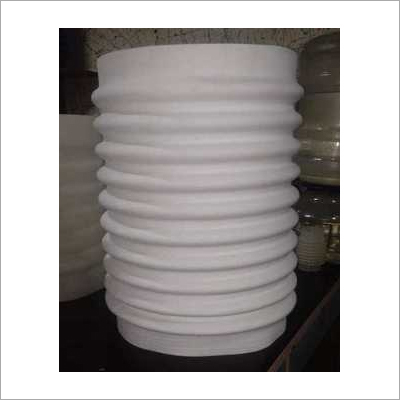
Tell us about your requirement

Price:
Quantity
Select Unit
- 50
- 100
- 200
- 250
- 500
- 1000+
Additional detail
Mobile number
Email

More Products in Rubber bellows Category
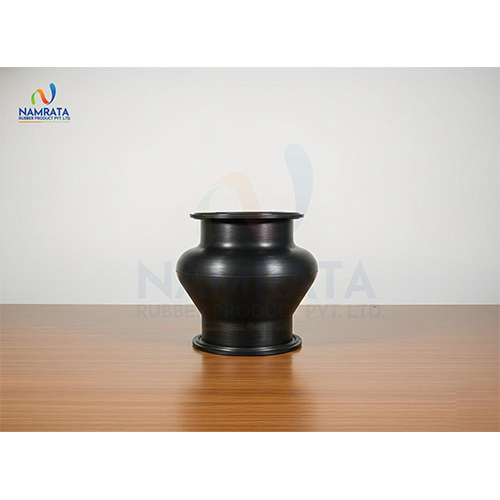
Silicone Antistatic Rubber Bellow
Price 850 INR / Number
Minimum Order Quantity : 2
Product Type : Antistatic Rubber Bellow
Length : Custom length up to 3 meters
Material : Conductive/Antistatic Silicone Rubber
Color : Black
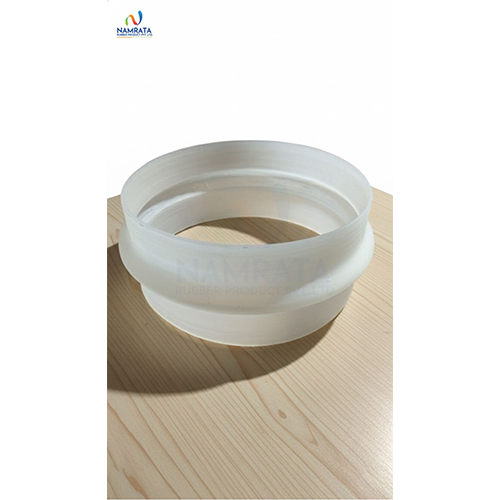
Silicone Rubber convolution Bellow
Price 900 INR / Number
Minimum Order Quantity : 2
Product Type : Convolution Bellow
Length : Upto 1000 mm or as specified
Material : Foodgrade Silicone Rubber
Color : Translucent white, Red, Blue, Customized on request
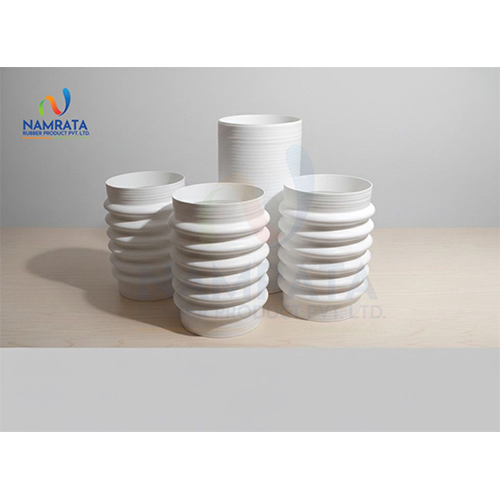
Milky white Silicon Rubber bellow
Price 950 INR / Number
Minimum Order Quantity : 2
Product Type : Silicone Rubber Bellow
Length : As required
Material : Silicone Rubber
Color : Milky white
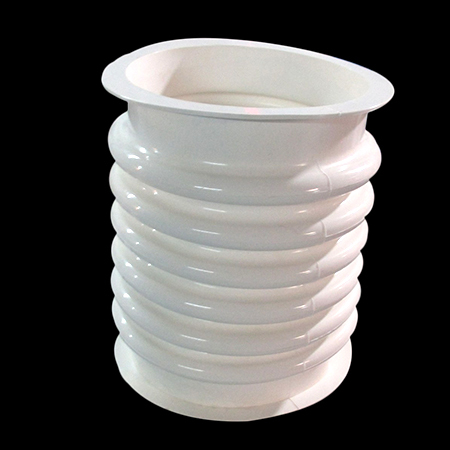
Flange Type Rubber Bellows
Minimum Order Quantity : 1 Piece
Product Type : Flexible Rubber Expansion Joint
Length : 100 mm to 300 mm (varies by size)
Material : Highgrade EPDM, Neoprene, Natural or Nitrile Rubber with steel flanges
Color : Black

Contact Details

- Sai Senha Ind. Gala No. A/2, Near Shiv sai Temple Phatak Road, Bhayandar East,Mira Bhayandar - 401105, Maharashtra, India
- Phone :08071792702

- Mr. Vishal Nagarkar (Director)
- Mobile :08071792702
- Send Inquiry
Our Category
NAMRATA RUBBER PRODUCT
All Rights Reserved.(Terms of Use)
Developed and Managed by Infocom Network Private Limited.
Developed and Managed by Infocom Network Private Limited.

